

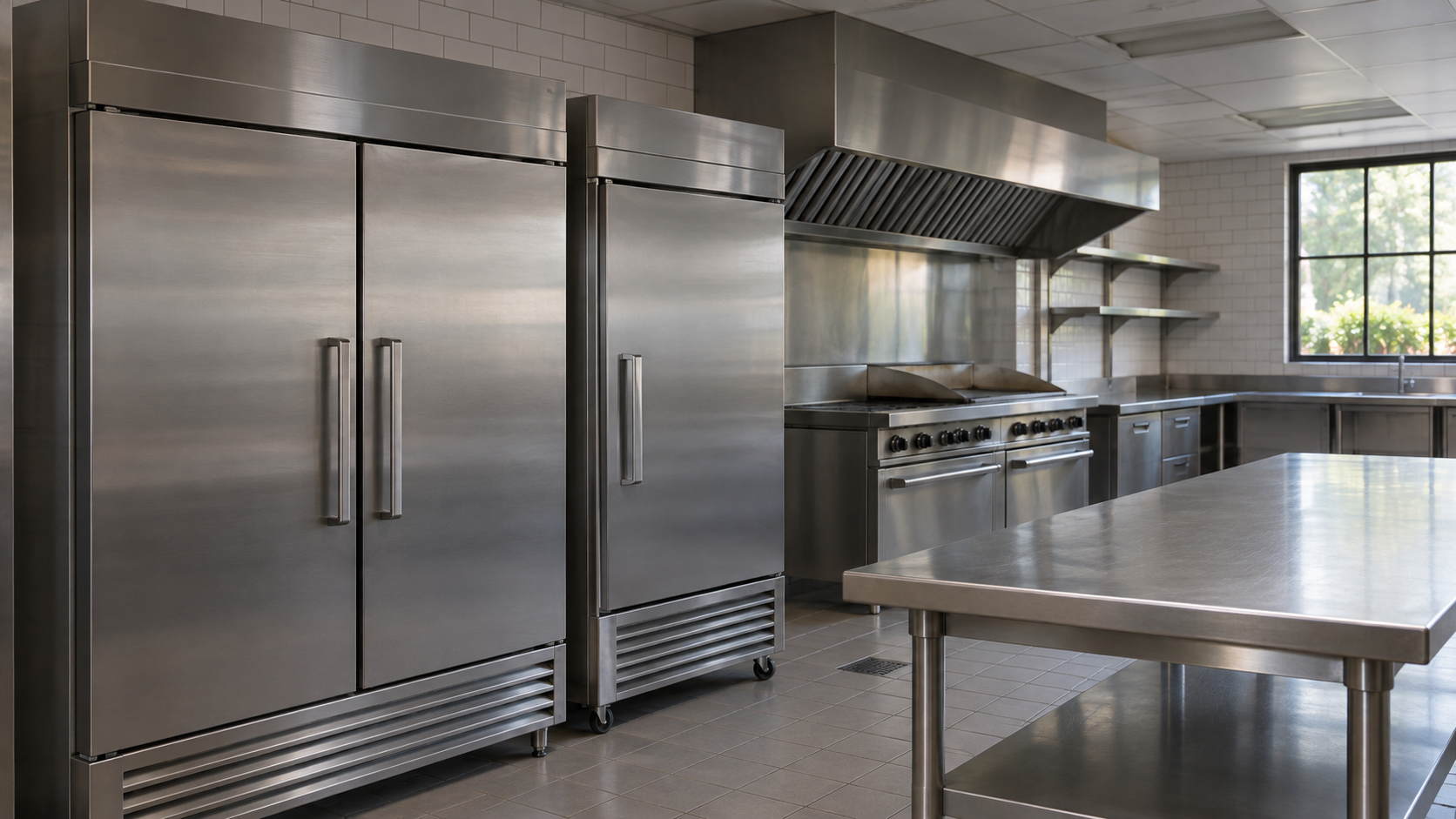
The lights are back on. The walk in cooler is running. That does not necessarily mean a restaurant can open its doors or that every part of the loss falls under the same insurance coverage.
An outage can leave several problems behind: questionable food, damaged refrigeration, cancelled reservations and employees scheduled for a shift that cannot happen. Then comes the restart. Someone needs to replace inventory, confirm that equipment can hold temperature and determine whether the kitchen can operate safely. Sales may take longer to recover than the electricity did.
Restaurant insurance can respond to some outage losses, but a contents limit alone does not establish coverage. Food, equipment and lost income may depend on different provisions. The useful question is which part of the loss a form addresses, what triggers it and what limits payment.
If you have a loss now, notify your insurer or agent promptly and follow the policy's reporting instructions. Do not wait until every repair invoice or inventory total is complete to report the event.
Do not let a claim inspection delay necessary food safety action. Follow the applicable food safety requirements and the direction of the appropriate authority. Where safe and practical, document affected stock before disposal and promptly ask the insurer what records it needs. You should not retain unsafe food simply because an adjuster has not visited.
Start with what happened, not what the coverage is called
A failed compressor and an interruption at the utility may leave the same refrigerator warm. They are not the same event for insurance purposes. Before assigning the loss to a coverage, establish the sequence as well as you can. Did equipment stop before the outage? Was the building affected while neighboring properties retained power? Did a technician identify a mechanical failure? What did the utility say about the cause?
A planned shutdown for electrical work also needs its own review; time without electricity does not, by itself, establish that a covered event occurred.
These questions are a way to organize the facts, not instructions to diagnose electrical equipment yourself. Keep the utility notice and the technician's findings. If the cause remains unknown, say that. An estimate presented as a confirmed cause can make the claim record harder to reconcile later.
Avoid assuming that one policy label resolves everything. A restaurant may have building and contents insurance, a businessowners policy, equipment breakdown coverage and several endorsements. Some forms combine protections that another insurer offers separately. An equipment breakdown package, for example, may include options for spoilage or business income. The answer is not always “the equipment policy repairs the machine and nothing else.” HSB's equipment breakdown overview illustrates why the actual contract matters.
Separate the food from the equipment and the lost sales
The refrigerator, the stock inside it and the income the restaurant loses are three different parts of the claim. Treat them separately in your records even if the same insurer ultimately handles them. Separate records do not mean the amounts can simply be added together. Ask how stock valuation and business income calculations interact so the same financial loss is not counted twice.
For food stock, review the spoilage form's covered causes, scheduled premises, limit, deductible and valuation method. Do not assume the amount is always the cost on the supplier invoice or the retail price of every meal you could have sold. A 2018 Travelers food and beverage specimen endorsement, for example, values covered spoilage at selling price less discounts and expenses that would otherwise have been incurred. That is different from automatically reimbursing the purchase invoice. It is an illustration of wording to inspect, not a description of every restaurant's policy.
The location of the interruption is another important distinction. Some spoilage forms address a power interruption originating either on or off the premises. It would therefore be misleading to say that every loss caused by an outage away from the restaurant requires a separate utility endorsement. Business income protection for that same interruption may work differently. Ask the agent to explain each loss category rather than giving one answer for the entire event.
For the refrigeration equipment, record its condition, the technician's diagnosis and the proposed repair. A machine being without power is not, by itself, proof that it suffered an insured breakdown. Keep repair estimates, maintenance records and any written explanation of the failure together.
For sales and operating expenses, keep a separate record of the interrupted operation. Ordinary property business income coverage commonly depends on a covered physical loss or damage trigger. Broader or different protection can be available through endorsements. The National Association of Insurance Commissioners explains business income and service interruption endorsements, including why the scope of coverage must be checked rather than assumed.
The cost of getting service back
Lost stock may be the most visible expense, but it is not the only financial question. If you pay staff while the dining room is closed, ask whether the relevant income coverage includes that payroll and whether any endorsement changes its treatment. The Florida Department of Financial Services discusses this exact restaurant outage question. Its guidance distinguishes normal continuing operating expenses from additional expenses incurred to keep operating.
Keep emergency spending separate in your records. If you rent temporary refrigeration, arrange an expedited repair or move part of the operation, record the cost, purpose and timing. Ask the insurer which, if any, provision applies and whether approval or other conditions are required. The fact that spending helped the business does not establish that it qualifies as covered extra expense. Necessary safety measures still take priority.
There may be more than one clock
Write down when power failed, when refrigeration temperatures became a concern, when operations stopped, when power returned and when normal service actually resumed. These times can be different, and each may help explain a different part of the loss.
The insurance clock is not necessarily the same as any of them. A policy may apply a waiting period before a business income loss is payable. Another coverage may use a deductible or a different condition. Do not use a number mentioned in a forum or another restaurant's claim as the waiting period on your contract.
Utility service coverage deserves a particularly careful conversation. Which utility property is included? Does the form require physical damage caused by a covered peril? Are overhead transmission lines included, excluded or selectable? What is the waiting period, how is its start defined, and is the limit separate or part of another limit? The CP 15 45 09 17 specimen in Conifer's hospitality forms, at PDF pages 101 through 103, illustrates these selections. It is not a statement of coverage for a Florida restaurant. The fact that the outage lasted longer than a waiting period does not establish that the other requirements were satisfied.
Ask about the other end of the timeline too. If power returns before the restaurant can operate, how does the relevant form treat the remaining interruption? If the doors reopen but sales lag, is there applicable extended business income coverage? There is no safe blanket promise that the insurer pays until revenue returns to its prior level. Travelers' business income guide explains the distinction between restoration and extended income protection.
Food safety and claim documentation need to work together
Florida restaurants should use commercial food service guidance, not assume that advice for a household refrigerator is enough. Florida DBPR's emergency recovery guidance addresses the services and conditions needed for safe operation after an emergency. Restored electricity alone does not establish that water, refrigeration, sanitation and the building are ready for service.
Whether operations must stop and what is needed to reopen depends on the actual conditions and applicable requirements. DBPR's food service inspection guidance addresses imminent health hazards and approval to resume after an emergency shutdown, with specified exceptions. For restaurants regulated by DBPR, an outage that may contaminate food or prevent safe holding temperatures must be reported to the division immediately. If an imminent health hazard may exist, operations must stop and the division must be notified unless an applicable exception permits continued operation. An unaffected area need not close. For an extended interruption of electrical or water service, the division may agree to continued operations when a written emergency plan has been approved, immediate corrective action controls the food safety risks and the division is informed when the plan is implemented. When operations stop under the emergency rules, obtain the regulator's approval before resuming. An insurer's claim decision and a regulator's permission to operate answer different questions.
Keep the insurance file understandable without making it bigger than necessary. An inventory should identify the affected items, quantities and the basis for their values. Photos should be connected to a date and location. Save disposal records where available, repair invoices, the outage notice and the relevant temperature records. Record actual facts and flag anything that cannot be verified.
For the income portion, sales history and continuing expenses matter. Business income generally means the net profit or loss that would have occurred, plus normal continuing operating expenses incurred, rather than gross sales. A cancelled dinner service is not automatically a claim for the menu price of every available seat. Keep records that show normal activity, the effect of the interruption and expenses actually incurred. The Insurance Information Institute's business claim guidance discusses the financial and property records insurers commonly need. Your insurer may request additional information for the particular claim.
Review the policy while the kitchen is running
The best time to find a spoilage limit that no longer fits the operation is before the next outage. Think about the most inventory the restaurant reasonably keeps on site, not just the contents on an unusually quiet weekday. A catering order, holiday service or seasonal peak may change that exposure. This is an input to the coverage review, not a substitute for the policy's valuation rules.
Bring the agent the current declarations and endorsements, the refrigeration setup, a realistic inventory estimate, operating hours and a description of any backup power. Ask what the existing protection would require for a utility outage versus an equipment failure. Ask about exclusions, waiting periods, valuation, limits and any maintenance or protective conditions that apply. Our commercial property hurricane guide provides broader context for a storm review, but an outage still needs its own analysis. If a provision is unclear, request the actual wording and an explanation of how it fits your operation.
Pair the policy review with a practical response plan. Decide who receives a refrigeration alarm, who calls the service contractor and where approved temporary cold storage could be arranged. Keep those contacts available to the manager on duty. HSB's refrigeration loss prevention guidance emphasizes detection, notification and a practiced response. These precautions help organize the response; they do not replace food safety requirements or establish insurance coverage.
That review should produce more than a reassuring sentence. You should be able to identify which form addresses food stock, which addresses equipment and which might respond to interrupted operations. You should also know what remains uncertain and what information the agent needs to resolve it.
RAM Risk Group can help restaurant owners review those questions before a loss. Contact the team with your current policy and a description of the operation.
Policy wording governs. Coverage depends on the issued policy, endorsements, limits, exclusions and facts of the loss. Public specimen forms are examples and may differ from your contract. This article provides general information, not a coverage determination or food safety clearance.